
Small Business PBX
A business of two or three people. The phone of a large business.
In a small business the business phone is usually the owner's mobile — and it works, until it doesn't: customers calling at ten at night, work calls in the middle of a simcha, and a private number that is passed around to everyone. Kesher's small PBX puts an organized layer between the customer and your mobile.
- Customer dials The business number — not the private mobile
- "Hello, you've reached Levi's Carpentry" A recorded greeting, short and to the point 1 Orders2 Opening hours
- Your mobile rings And you can see it's a business call, not a private one
- Answered? Great Didn't answer? A voicemail message is waiting in your email
- And after business hours "The shop is closed, we'd be glad to hear from you tomorrow from 9:00"
When the business and the mobile are the same number — both lose
Separate home from work
The business gets its own number, and the private mobile goes back to being private. Business calls come through the system and are identified as such, and during hours you've set as closed, they meet an organized message instead of waking up the household.
And when you call a customer back through the system, he sees the business number — not your mobile.
Sound like the business you want to be
The customer doesn't know how many employees you have — he hears a recorded greeting, a short menu and a businesslike answer. A business that answers this way is seen as one you can rely on, before you've even started to speak.
No call disappears between your hands
You were at a customer's, your hands were full, the call was missed — it happens. The difference: now it's recorded in the call log with the time and the number, and the voicemail message is waiting for you in your email. In the evening you go over the list and get back to everyone.
Grow without breaking anything
Hired your first employee? Add an extension and the menu gets another branch. Opened a second location? More extensions on the same system. The number, the greeting and your customers' habits all stay in place.
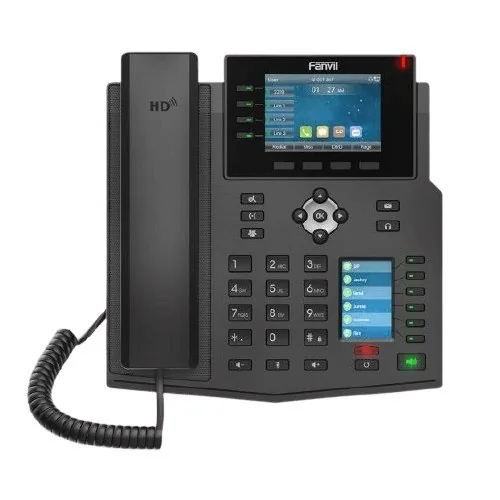
What does it ask of you? Almost nothing
What small business owners ask us
I answer from my mobile anyway. Why do I need a PBX?
For everything that happens around answering: a customer who hears a professional greeting instead of a bare ring, an opening-hours message instead of a phone ringing in the middle of a family celebration, a voicemail that reaches your email instead of a call that gets forgotten, and a business number that stays with you even if you change phones. You keep answering from the same device. The business just no longer depends on it.
Can I start small, with one extension?
Yes, and most small businesses start exactly like that: a business number, a short menu and one extension that rings on your mobile. When an employee joins, you add an extension in the settings. It is not a project.
What does a customer hear if I am in the middle of another call?
Whatever you decide: hold music until you are free, a transfer to a partner or employee, or a recorded message with voicemail. The second call does not hit a busy signal.
I already have a number that is published everywhere. Can I use it?
Yes. We port your existing number to the system and it keeps working exactly as before. The difference is that now it has a menu, business hours and a backup behind it.
Related
A ten-minute intro call. That is all it takes.
You tell us what you have today, and we tell you what can be improved and what it costs. If it is not right for you, we will tell you that too.
077-921-9000