What Is a Calling Card?
A calling card is a personal code with a balance: you dial it before a call, and the call is deducted from the card's balance. In institutions, every student gets a card — and is responsible for their own use.
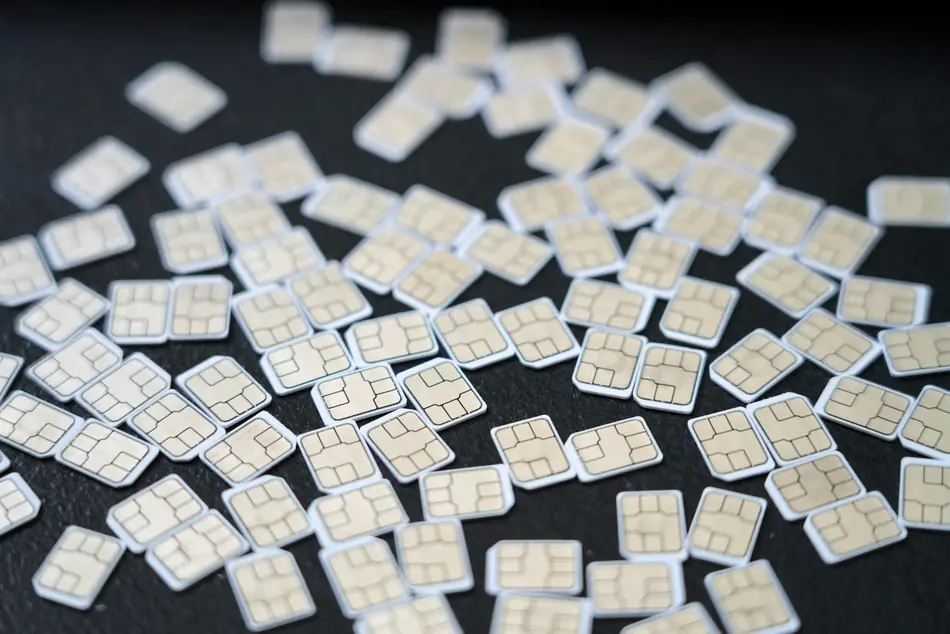
From the line at the payphone to a personal card
Anyone who lived in a dormitory in the previous generation remembers the picture: one payphone in the hallway, a line of students, tokens in the pocket and later a Telecard. The call home was short, because five others were waiting behind. And parents who wanted to reach their son? They called the office and left a message with whoever answered.
A calling card on a PBX is the modern version of the idea. There is no plastic card with a chip — there is a card number and a password, and behind them a balance. You enter them at the station, and the call is recorded on the card. Each student is responsible for his own card, and the station itself stays locked to anyone who doesn't have a card.
The big difference: the card isn't tied to one phone. Any station in the institution that is set up for cards can accept it, and everything is managed from one place in the office.
How a call with a card works
- Pick up the handset at the station. The station is locked for outgoing calls.
- Enter the card number and the password.
- The system checks that the card is active and has a balance.
- If everything is in order — dial the number, and the call is deducted from the card's balance.
- If the card is blocked or empty — the call doesn't go out.
The password matters more here than it seems. A card number alone can be seen over someone's shoulder. The password is what keeps one student from talking on his friend's account.
The personal voicemail box: parents leave a message
Each card comes with a personal voicemail box. This is the part parents like best. Instead of calling the office and asking them to "tell him to call back," they leave a message directly for their son, in their own voice.
The student hears the messages when he has a free moment — at a break, after seder, in the evening. No one in the office has to write down notes, and no message gets lost along the way. And a mother who only wants to say "Good Shabbos, we spoke with the Rabbi" doesn't have to catch him at exactly the right minute.
There is also a quiet side to this. The phone in the dormitory doesn't keep ringing for students who are in the middle of seder, and yet every message reaches the person it's meant for.
Start of term: issuing cards for all the students
The busiest moment of the year is the start of the term. Dozens or hundreds of new students, and each one needs a card. Setting up each card by hand is days of work.
That's why issuing is done from a list. The office prepares a list of names — it can be from an Excel file that the administration already has — and uploads it. The system produces for each student a card, a voicemail box and a password, all at once, together with an organized file for handing out. Print, cut, distribute.
- Prepare the list in advance: full name, and if you like — class or year.
- Divide the cards into groups, for example by class, so they are easy to find and manage.
- Explain to the students in a few sentences how to dial and how to listen to messages.
- Send the parents a short explanation of how to leave a message in the voicemail box.
Ongoing management: balance, recharging and a lost card
After the cards are handed out, most of the work is quiet routine from the office:
- Recharging. Add balance to a card — when the parents pay, or according to what the institution decided.
- Checking the balance. See how much is left on each card. A student who asks "why won't it dial" gets an answer in a second.
- Blocking. A card that was lost, or whose password was exposed, is blocked immediately. No one will talk on another student's balance.
- Groups. Organize the cards by class, year or dormitory, and see the picture for each group.
At the end of the term, or when a student leaves, block his card. That way the list of active cards always reflects who is actually in the institution.
The station and the daily schedule
A calling card solves the question of who is dialing and on whose account. But in a dormitory there is another question: when. A station that rings in the middle of seder disturbs everyone.
That's why the dormitory station respects the daily schedule. During seder it doesn't ring, and whoever calls hears a message about calling hours. This is built with time-based routing — the same tool businesses use for their business hours.
The station itself can be built from a simple, sturdy phone connected through an adapter, or from an IP phone. A simple phone with large keys holds up better in a dormitory hallway.
Not only yeshivas
The same idea suits any place where several people share one phone, and each one needs to pay for his own calls or be responsible for them: dormitories and educational institutions, work sites with a shared station, organizations with volunteers who call from the organization's phone.
Questions the office asks at the start: Who loads the balance — the parents or the institution? What do you do with a student whose balance runs out in the middle of the week? Do all the students get a card, or only those who asked? There is no single right answer, but it's worth deciding before the cards are handed out, and writing the answers on the explanation sheet for parents.
And a tip for the students: don't write the password on the card itself, and don't enter it when someone is standing right next to you. A lost card without a password is almost no risk; a lost card with the password written on it — block it right away.
The advantage is the same in every case: no surprises on the bill, personal responsibility, and a clear limit set in advance. For institutions of young children, who won't remember a code, there is a different solution — a student phone.
Start of term, step by step: from the spreadsheet to the slip of paper in hand
Let's follow a yeshiva with 180 students in the week before Rosh Chodesh Elul. The secretary received a list of accepted students from the administration, and he has three days until the students arrive.
- Sunday — organize the list. An Excel file with a column for full name and a column for class. That's all that's needed. It's worth going over the names once: two students with the same name will get different cards, but at handout it will cause confusion — add to one of them his mother's family name or his city.
- Sunday — upload and issue. Upload the file in the calling cards screen. The system issues for each name a card number, a password and a voicemail box. A group is created for each class, so that in Cheshvan, when someone asks "whose card is this," you find it in a second.
- Monday — test one card. Before printing 180 slips, take one card from the list, go to the station in the dormitory, enter it, dial home, and then call the voicemail box from a cell phone and leave a message. If all three things worked — continue. If not — fix it once rather than 180 times.
- Monday — print the handout file. The file the system produces has one row per student: name, card number, password. Design a small slip from it that folds in half: the name on the outside, the details on the inside, and three lines of explanation: how to dial, how to hear messages, and whom to turn to when there is a problem.
- Tuesday — hand out by class. The supervisor (mashgiach) of each class receives the slips for his students and hands them out personally. Not in a box in the hallway. A slip taken by mistake by another student is a card that has to be blocked and reissued.
- The same day — a letter to the parents. Half a page: the dormitory's number, how to reach their son's voicemail box, and who loads the balance. Parents who know from the first day how it works don't call the office to ask.
The whole process takes a few hours of net work, and it repeats at the start of each term only for the new students. The cards of the veteran students continue as they are.
An ordinary day in the dormitory
After the handout, the card disappears into the routine — which is exactly what it should do. Here is what one day looks like:
- 07:10 — Before prayers, a student picks up the handset at the station, enters his card and password, and dials home to say he's coming on Friday. A call of a minute and a half, deducted from his balance.
- 09:30 — A mother calls the dormitory's number. Morning seder is in the middle, and the station doesn't ring. She hears a message with the calling hours and reaches her son's voicemail box. "Grandpa is in the hospital, everything is fine, call tonight." Half a minute, in her own voice.
- 13:20 — During the lunch break the student goes to the station, enters his voicemail box and hears the message. He dials his mother for a short call. No one in the office knew, and no one needed to know.
- 16:00 — Another student discovers that his card won't dial. He goes to the office. The secretary looks at the screen: the balance is zero. The student calls his parents from the office, the parents transfer payment, the secretary loads it, and that's it.
- 21:30 — After evening seder, the station is busy. Five students in line. In a dormitory with one station for fifty students this is the situation every evening, which is why many dormitories put two stations on a floor — an adapter with several ports connects them all.
The way parents reach the voicemail box — a key in the dormitory's menu, a dedicated number, or entering the card number — is set at setup according to what is convenient for the institution. What matters is that the explanation to parents is one sentence, because a mother who has to remember four steps will call the office instead.
What the office sees, and what it does with it
The secretary doesn't need to look at the cards every day. But a few regular glances save problems:
- Balance by group. Once a week, a look at an entire class: who is about to run out. You can remind the parents before the student finds out on Friday afternoon.
- Cards that don't move. A balance that hasn't changed in two months is either a student who doesn't call, or a student who didn't understand how it works. One question from the supervisor clears it up.
- Cards of those who left. A student who moved to a different yeshiva mid-term — block the card that same week, not at the end of the year.
- What happens with the leftover balance. When a student finishes, sometimes a balance remains on the card. Refund it, transfer it to charity, or delete it — according to what you wrote in advance on the explanation sheet for parents. Nothing generates more calls to the office than a balance of twenty shekels with no policy.
A lost card, a used-up balance: what to do when it doesn't work
| What the student says | The common cause | What the office does |
|---|---|---|
| "The card won't dial" | The balance ran out | Check the balance; recharge |
| "The card won't dial" and there is a balance | Wrong password, or the station is closed during seder hours | Enter it together once; check the time against the station's hours |
| "The card won't dial" only to a certain destination | The destination isn't allowed from the station — abroad, a premium-rate number | Explain the rule; in a justified case, dial from the office |
| "I lost my card" | The slip got lost | If the password wasn't written on it — give the details again. If it was — block it, issue a new one, and decide about the balance according to the policy |
| "Someone talked on my card" | The password was exposed | Block immediately, a new card, and a short talk with whoever needs one |
| "The parents can't leave a message" | Wrong box number, or a box full of old messages | Send the parents the explanation again; the student deletes old messages |
One rule brings order to the whole table: the card itself is almost never the problem. Either the balance ran out, or there is a keying mistake, or the station is closed. Before issuing a new card, check these three.
Calling card or a students' phone: which institution needs what
The two solutions solve the same problem — a shared phone in an institution — from two opposite directions. With a student phone, the restriction is on the station: it dials only a pre-approved list, and doesn't ask who is dialing. With a card, the restriction is on the person: he identifies himself, and talks on his own balance. From this you can work out which institution needs what:
| Type of institution | The suitable solution | Why |
|---|---|---|
| Cheder, Talmud Torah — children up to bar mitzvah age | Students' Phone | A child won't remember a password; all the calls are home anyway |
| Yeshiva ketana, without a dormitory | Student phone, and sometimes no station at all | The students go home every day; the need is small |
| Yeshiva ketana with a dormitory | A combination: cards for the upper grades, student phone for the lower | The younger ones only need to call home; the older ones begin to make calls of their own |
| A large yeshiva, dormitory | Calling card + personal voicemail box | Hundreds of students, calls to various destinations, personal responsibility for the cost |
| Kollel | Usually not needed | The avreichim have their own phones; the station in the office is enough |
| Preparatory program, educational dormitory | Calling Card | A clear limit on calls, and a voicemail box so the parents don't call the office |
| A gemach or nonprofit with volunteers who dial from the office | Calling Card | Knowing who called and what it cost; not necessarily charging |
| A work site with a phone shared by the workers | Calling Card | Private calls on the worker's account, work calls on the contractor's account |
Both solutions sit on the same PBX, so an institution that starts with a student phone and adds a dormitory two years later doesn't have to replace anything — just add cards.
Common mistakes by the office
- Handing out cards without testing one first. A mistake in the station setup gets discovered in front of 180 students instead of in front of one secretary.
- Printing the password large and prominent. The slip stays in the jacket pocket, and in the laundry or on a table in the dining room everyone can see it. Print the password small, on the inside.
- Not deciding who recharges. "The parents" isn't an answer; you need how, when, and who gets notified.
- Forgetting the veterans. At the start of the term you issue for the new students, but veterans sometimes moved up a class — update the groups, otherwise a search by class is misleading.
- One station for everyone. A line of ten students after evening seder is the most common cause of complaints, and the easiest to solve.
How it works with us at Kesher
With us, calling cards are managed from the "Calling Cards" screen in the control panel. At the start of the term you upload a list of names — even from an Excel file — and the system issues for each student a card, a voicemail box and a password, with an organized file for handing out.
From the same screen you load balance, see the balance of each card, block a lost card and organize the cards into groups. There's no need to contact us for every card — but if you prefer, you can ask us to make the changes.
Each student's voicemail box works like any voicemail box on the PBX: a greeting, messages, listening and deleting. The parents leave a message, and the student hears it when he has a free moment.
We set up the dormitory station so that it respects the daily schedule: during seder it doesn't ring, and whoever calls hears a message about calling hours. The equipment arrives pre-configured, and there is an illustrated guide for each screen.
FAQ
What do you do when a student loses his calling card?
You block the card from the control panel, so no one else can use it.
How do parents leave a message for their son in the dormitory?
Each card has a personal voicemail box. The parents leave a message in it, and the student hears it when he has a free moment.
Can cards be issued for the whole yeshiva at once?
Yes. You upload a list of names, even from an Excel file, and the system issues a card, a voicemail box and a password for each one.
Why is a password needed, and not just a card number?
So that someone who saw the card number can't dial on its owner's account.
Does the station ring during seder?
You can set it not to. During seder it doesn't ring, and whoever calls hears a message about calling hours.
A student forgot his password — what do you do?
The office finds his card on the list, by name or group, and gives him the details again. If there is a concern that someone else knows the password, block it and issue a new card.
How does the office know how much a student talks?
By the card's balance: how much was loaded and how much is left. A student whose balance runs out every week talks a lot; a student whose balance hardly moves almost never calls.
What is the difference between a calling card and a personal extension for each student?
An extension is a phone; a card is an identity. With cards there is no need for a phone for each student — a few stations serve everyone, and each person comes with his own card and pays for his own calls.